
The Sleep-Stress Loop: Why Anxiety Kills Sleep and Poor Sleep Creates Anxiety
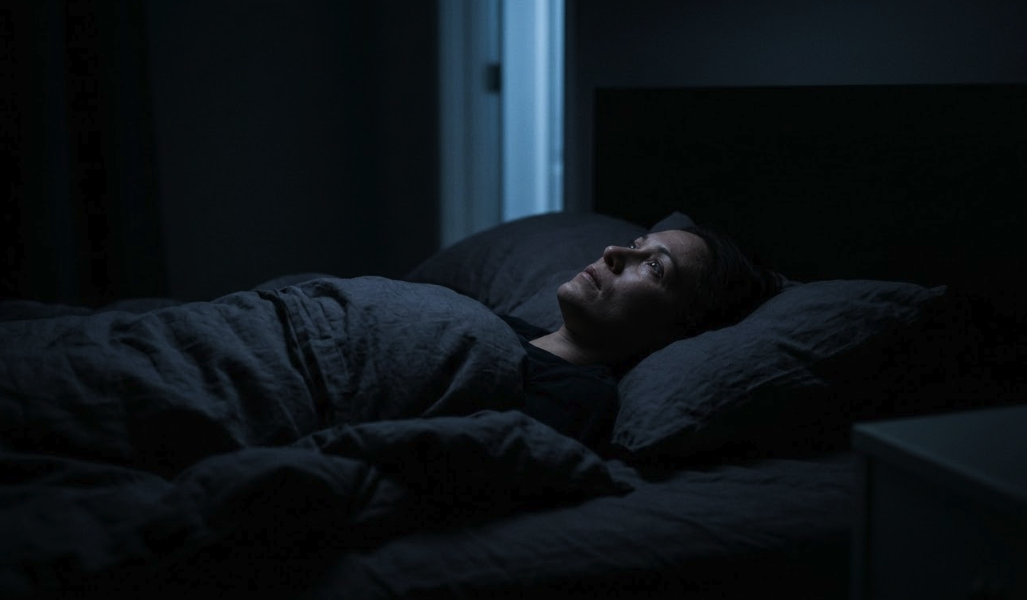
Anxiety kills sleep. Poor sleep creates anxiety. Breaking the loop is the whole game.
Most people who struggle with sleep think they have a sleep problem.
They don't. They have a stress problem that shows up at bedtime.
The relationship between sleep and stress is not one-directional. It's a loop. Stress degrades sleep quality. Poor sleep amplifies the stress response. The amplified stress response makes the next night harder. Which makes the next day harder. Which generates more stress. Which degrades the next night's sleep.
Once you're inside the loop it's self-perpetuating. And because both ends of it feel like separate problems, most people treat them separately and wonder why neither improves.
What Stress Does to Sleep
When your brain perceives a threat, real or imagined, it activates the hypothalamic-pituitary-adrenal axis and releases cortisol. Cortisol is the primary stress hormone and one of its core functions is to increase alertness and prepare the body for action. In an acute threat situation this is exactly what you want. Your heart rate rises, your senses sharpen, your muscles prime for movement.
The problem is that the brain doesn't distinguish well between a physical threat and a psychological one. A predator in the dark and a difficult conversation tomorrow morning produce similar cortisol responses. The brain registers both as threats that require vigilance. And vigilance is the neurological opposite of sleep.
Sleep requires the nervous system to shift from sympathetic activation, the fight or flight state, to parasympathetic dominance, the rest and digest state. Cortisol actively prevents this transition. A brain running elevated cortisol at bedtime cannot downshift into the relaxed, low-arousal state that sleep onset requires. You lie down, you're physically exhausted, and your mind won't stop. That's not a character flaw. That's cortisol doing exactly what it's designed to do at exactly the wrong time.
Chronic stress compounds this further. When the stress response is activated consistently over weeks and months, cortisol rhythms become dysregulated. Normally cortisol peaks in the morning to help you wake up and declines through the day, reaching its lowest point in the evening to allow sleep. Chronic stress flattens and disrupts this curve. Evening cortisol stays elevated when it should be dropping. The biological conditions for sleep stop arriving on schedule.
What Poor Sleep Does to Stress
The other direction of the loop is equally damaging.
Sleep is when the brain processes and regulates emotional experience. During REM sleep in particular, the brain replays emotionally significant events from the day but does so in the absence of noradrenaline, the neurochemical most associated with anxiety and threat response. This is thought to be the mechanism by which sleep strips the emotional charge from difficult memories. You go to bed troubled by something and wake up with a slightly different relationship to it. The event is the same but the emotional weight has shifted.
When sleep is insufficient or fragmented, this processing doesn't complete. The emotional residue from the previous day doesn't get cleared. You wake up carrying yesterday's stress load into today, starting already behind baseline. The prefrontal cortex, which is responsible for rational evaluation and emotional regulation, is particularly sensitive to sleep deprivation. After a poor night it functions measurably worse. The amygdala, which drives emotional reactivity, becomes measurably more sensitive.
The practical result is that a sleep-deprived person experiences the same events as more threatening, more frustrating, and more overwhelming than a well-rested person would. The world hasn't changed. The brain's ability to process it has. And a brain that perceives more threat generates more cortisol, which makes the next night harder, which makes the brain more reactive, which generates more stress.
This is the loop running in both directions simultaneously.
Where Most People Get Stuck
The most common mistake is trying to fix the sleep end of the loop without addressing the stress end.
Sleep hygiene protocols help. Consistent sleep and wake times, a cool dark room, screens off before bed, no caffeine after noon. These are real interventions and they matter. But if you implement all of them while carrying a chronic stress load that has your cortisol elevated at 10pm, the protocol will underperform. You've optimized the conditions but not the underlying biology.
The second most common mistake is treating the stress end without understanding its connection to sleep. People manage their daytime stress reasonably well but don't connect their unresolved stress patterns to their sleep quality. The rumination that starts at 2am didn't originate at 2am. It's the unprocessed residue of the day finding its moment when the distractions finally stop.
Breaking the Loop
The loop has entry points at both ends and the most effective approach addresses both.
On the stress side, the intervention that has the most direct impact on evening cortisol is the transition ritual. The brain needs a clear signal that the active, alert, problem-solving phase of the day is ending and the wind-down phase is beginning. This doesn't require an elaborate routine. It requires consistency. The same sequence of low-stimulation activities at the same time each evening — a walk, light reading, a warm shower, gentle stretching — trains the nervous system to begin the parasympathetic shift on schedule.
Journaling before bed is one of the most evidence-supported sleep interventions available and one of the least used. Writing down the things on your mind, the unresolved tasks, the concerns, the things you're processing, externalizes them. The brain's tendency to ruminate is partly driven by a fear of forgetting important things. Getting them onto paper quiets that drive. A specific form that works particularly well is a brief to-do list for tomorrow. Research by Baylor University found that writing a specific, concrete to-do list for the following day before bed helped people fall asleep significantly faster. The brain can let go of what it trusts has been captured.
On the sleep side, protecting sleep duration and consistency creates the biological conditions for better stress regulation the next day. The relationship is bidirectional, which means improvement at either end produces improvement at the other. You don't need to fix everything simultaneously. You need to create a small positive shift in one direction and let the loop begin working for you rather than against you.
The Virtuous Cycle
The same mechanism that makes the loop vicious makes it virtuous when it runs in the right direction.
Better sleep produces a more regulated stress response the next day. A more regulated stress response produces lower evening cortisol. Lower evening cortisol produces better sleep that night. Better sleep produces better stress regulation. Each cycle reinforces the next.
This is why people who fix their sleep often report that everything else in their life feels more manageable almost immediately. Their circumstances haven't changed. Their neurological capacity to handle those circumstances has. The stress didn't decrease. The brain's ability to process it improved.
That's the loop. It runs in whichever direction you point it. Point it right and it compounds in your favor.
