
The Gut-Brain Axis: How Your Microbiome Shapes Your Mood and Mental Clarity
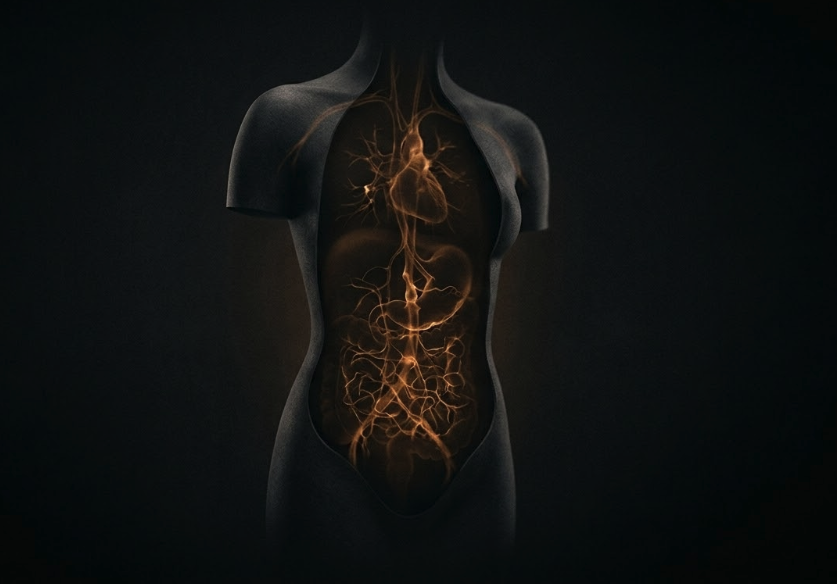
What you feed your gut, you feed your mind.
The idea that mental health is purely a brain problem is becoming harder to defend.
Not because the brain doesn't matter. It does. But the emerging science on the gut-brain connection is revealing that the brain operates in constant, bidirectional conversation with the digestive system. And that the quality of that conversation, shaped significantly by what you eat, has measurable effects on mood, anxiety, cognitive function, and mental resilience.
The gut isn't just a digestive organ. It's a communication hub with a direct line to your brain. What you feed it shapes what it sends back.
The Second Brain
The enteric nervous system is a network of roughly 500 million neurons lining the walls of your gastrointestinal tract. IIt's capable of operating independently of the central nervous system and regulates digestive function on its own. Neuroscientists sometimes call it the second brain, not metaphorically but anatomically. It contains more neurons than the spinal cord.
This system communicates with the brain primarily through the vagus nerve, a long wandering nerve that runs from the brainstem down through the neck, chest, and into the abdomen. The vagus nerve is bidirectional but approximately 80 percent of its fibers run from the gut to the brain rather than the other way around. The gut is sending more information to the brain than the brain is sending to the gut.
What the gut sends depends largely on the state of the microbiome, the approximately 100 trillion microorganisms living in your digestive tract. This ecosystem produces neurotransmitters, regulates immune function, manages inflammation, and sends a constant stream of signals upward through the vagus nerve that influence your neurological and psychological state.
The Microbiome and Mood
Roughly 90 percent of the body's serotonin is produced in the gut, not the brain.
Serotonin is the neurotransmitter most associated with mood regulation, feelings of wellbeing, and emotional stability. The version produced in the gut doesn't cross the blood-brain barrier directly, but it regulates gut motility and sends signals through the enteric nervous system that influence the brain's own serotonin system. The gut's serotonin production is directly affected by the composition of the microbiome. Certain bacterial strains stimulate serotonin-producing cells. Others suppress them.
The microbiome also produces GABA, the primary inhibitory neurotransmitter that reduces neuronal excitability and has a calming effect on the nervous system. It produces short-chain fatty acids that cross the blood-brain barrier and influence inflammation and neurological function directly. It regulates cortisol through the hypothalamic-pituitary-adrenal axis, the same stress response pathway discussed in the sleep-stress loop article.
The research connecting microbiome composition to depression and anxiety is still developing but the signal is strong enough to take seriously. Studies in both animals and humans have found that disrupting the microbiome produces anxiety-like and depression-like behavior, and that restoring microbiome health improves mood. The causality isn't fully established in either direction but the relationship is clearly real.
The Inflammation Connection
The microbiome is the primary regulator of intestinal permeability, the integrity of the gut lining that determines what gets absorbed into the bloodstream and what stays in the digestive tract.
A healthy, diverse microbiome maintains tight junctions between intestinal cells that keep the contents of the gut where they belong. A degraded microbiome, disrupted by poor diet, stress, antibiotics, or low fiber intake, allows partially digested food particles and bacterial products to pass through the gut lining into the bloodstream. This triggers an immune response. Systemic inflammation follows.
That inflammation doesn't stay in the gut. It crosses the blood-brain barrier and drives neuroinflammation, inflammation in the brain itself. Neuroinflammation is increasingly understood as a significant driver of depression, anxiety, cognitive impairment, and brain fog. The mechanism connects what's happening in your gut directly to how clearly you think and how stable your mood is.
This is one of the most direct biological pathways between diet and mental fitness. A diet that degrades the microbiome produces gut inflammation. Gut inflammation produces systemic inflammation. Systemic inflammation produces neuroinflammation. Neuroinflammation impairs the mental fitness pillar at the neurological level, regardless of what practices you're doing to support it from the top down.
What Feeds a Healthy Microbiome
The microbiome is shaped significantly and relatively quickly by diet. Studies have shown meaningful changes in microbiome composition within days of significant dietary shifts. The direction of change depends on what you're feeding the ecosystem.
Fiber is the primary food source for beneficial gut bacteria. Specifically fermentable fiber found in vegetables, fruits, legumes, and whole grains. Beneficial bacteria ferment this fiber and produce short-chain fatty acids including butyrate, which supports gut lining integrity, reduces inflammation, and has direct neurological effects. A low fiber diet starves beneficial bacteria and shifts the microbiome toward less beneficial species.
Diversity of plant foods is the single most reliable dietary predictor of microbiome diversity, which is associated with better health outcomes across nearly every metric studied. The research suggests that consuming 30 or more different plant foods per week produces meaningfully better microbiome diversity than a narrower diet. This doesn't require exotic ingredients. It requires variety — different vegetables, different legumes, different fruits, different whole grains across the week.
Fermented foods introduce live beneficial bacteria directly into the digestive tract. Yogurt with live cultures, kefir, sauerkraut, kimchi, kombucha, and miso all contribute. A Stanford study published in 2021 found that a diet high in fermented foods increased microbiome diversity and reduced inflammatory markers more effectively than a high fiber diet alone over a ten-week period. Both matter. Combined they're more effective than either independently.
What degrades the microbiome is largely the same list from the subtraction article. Ultra-processed foods, excess sugar, refined seed oils, and alcohol all reduce microbiome diversity, increase intestinal permeability, and shift the bacterial composition toward species associated with inflammation and poor metabolic health.
The Bidirectional Reality
The gut-brain axis runs in both directions, which creates both a vulnerability and an opportunity.
Chronic stress degrades the microbiome through cortisol's effects on gut motility and intestinal permeability. A degraded microbiome amplifies the stress response by dysregulating the HPA axis and reducing the production of calming neurotransmitters. The loop between stress and gut health mirrors the sleep-stress loop — each end making the other worse when the system is struggling, each end supporting the other when it's functioning well.
This means that supporting the microbiome through diet is a mental fitness intervention as much as it is a dietary one. It's working on the biological substrate of mood and cognition from the bottom up while practices like the Pause, reframing, and journaling work on it from the top down. The two approaches are complementary and more effective together than either is alone.
The food you eat is not just fueling your body. It's shaping the ecosystem that shapes your brain. That connection deserves at least as much attention as any other aspect of the framework.
Feed the gut well. The mind will follow.
