
The Pause: The Most Underrated Tool in Your Mental Arsenal
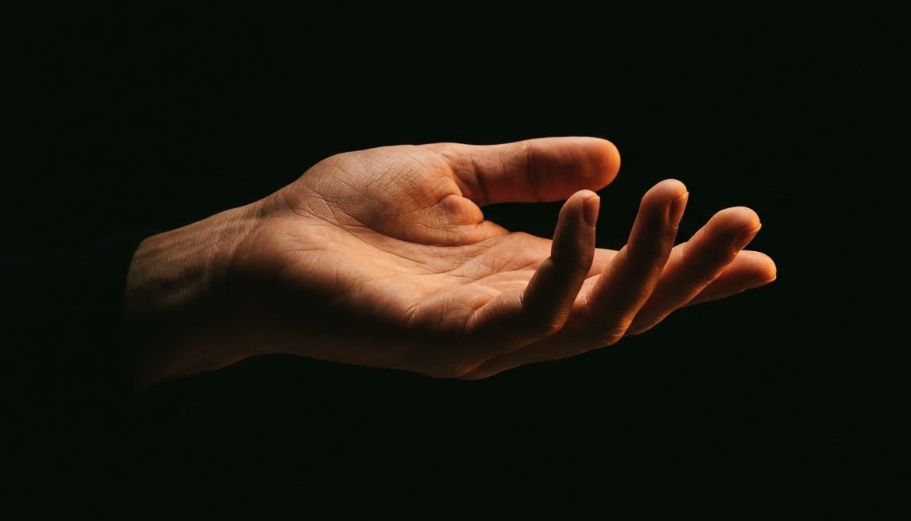
Everything changes in the space between what happens and how you respond.
Between what happens to you and how you respond, there is a space.
It's small. Sometimes it's a fraction of a second. Sometimes it's long enough to take a breath, feel your pulse, notice what's happening in your body before it reaches your mouth or your hands. The size of that space varies. But it's always there.
That space is where your agency lives.
Viktor Frankl, the psychiatrist who survived the Nazi concentration camps and wrote about the experience, put it this way: between stimulus and response there is a space, and in that space lies our freedom. He arrived at this insight in the least comfortable circumstances imaginable. Everything had been taken from him except one thing. The ability to choose his response to what was happening.
Most of us will never face anything close to what Frankl faced. But the principle applies at every scale. From the catastrophic to the mundane. From the conversation that could spiral into a fight to the email that lands wrong to the minor daily frustration that has a way of compounding if you let it.
The Pause is the deliberate practice of finding that space and using it.
Why It's So Hard
The challenge is that the human brain is wired for speed, not deliberation.
The amygdala, the brain's threat detection system, processes emotional stimuli faster than the prefrontal cortex can formulate a considered response. By the time your conscious mind has assessed the situation, your emotional brain has already generated an impulse. Fight, flee, freeze, or appease. The impulse arrives first. Reason arrives second.
This was enormously useful when the threats were physical and immediate. A predator, a rival, a sudden drop. The fast response kept you alive. The deliberate one would have been too slow.
The problem is that the same system fires for social and psychological threats at the same speed. Your boss criticizes your work in a meeting. Someone cuts you off in traffic. A text message lands with the wrong tone. The amygdala doesn't distinguish between a lion and an awkward email. The threat response activates either way.
The result is a life where emotional reactivity drives far more of your behavior than you'd consciously choose. Where you say things you later regret. Where small provocations produce disproportionate responses. Where you're managing the fallout of reactions rather than making deliberate choices.
The Pause is the intervention. It's the practice of creating just enough space between the stimulus and the response that the prefrontal cortex can get involved. Not to eliminate the emotional response but to ensure it doesn't run the show unilaterally.
What the Pause Actually Is
The Pause is not suppression.
Suppressing an emotional response pushes it down without resolving it. The pressure builds. It comes out later, usually worse and in the wrong context. That's not what this practice is.
The Pause is also not detachment. It's not about becoming emotionally flat or training yourself not to feel things. Strong emotions are useful information. Anger signals that something important to you has been violated. Fear signals that something you value is at risk. Sadness signals loss. These signals matter. The goal is to receive them without being controlled by them.
What the Pause actually is is a brief moment of conscious noticing before action. You feel the emotion arise. You notice it. You name it if you can. And in that noticing, you create just enough distance between the feeling and the response to make a choice rather than execute an automatic reaction.
The choice doesn't have to be calm. Sometimes the right response is direct and forceful. Sometimes it's to say exactly what you're feeling. The Pause doesn't prescribe the response. It just ensures that you're choosing it rather than being swept into it.
How to Build It
The Pause is a trainable skill. It gets easier and more automatic with practice. The reps look like this.
Physical anchoring is the most accessible entry point. When you notice a strong emotional response arising, take one slow breath before you speak or act. Not a dramatic pause. Just a breath. That single breath is enough to interrupt the automatic response cycle and give your prefrontal cortex time to engage. It sounds almost insultingly simple. It works.
Labeling the emotion is the next level. Research by UCLA neuroscientist Matthew Lieberman showed that simply naming an emotion, saying to yourself "I'm feeling angry" or "this is anxiety" activates the prefrontal cortex and reduces amygdala activity. The act of labeling creates the neurological conditions for a considered response rather than a reactive one. You don't need to say it out loud. The internal acknowledgment is enough.
The question is the most powerful tool for extended situations. When you're about to respond to something significant, ask yourself one question before you do: is this the response I'd choose if I weren't reacting? It doesn't require a long deliberation. Just the question. The answer usually presents itself quickly and honestly.
Where It Shows Up in the Framework
The Pause is most obviously a mental fitness practice. But its effects ripple across the entire system.
Sleep is directly affected by the emotional regulation the Pause supports. Unprocessed emotional reactivity from the day, unresolved conflicts, rumination that never got interrupted, these are what keep people awake at 2am cycling through conversations they should have handled differently. Better emotional regulation during the day produces a quieter mind at night.
Diet decisions happen in moments of impulse more often than moments of deliberation. The 10pm reach for something you don't need, the stress eating that follows a difficult afternoon, the reactive choice made because you're tired and depleted. The Pause creates the space where a different choice becomes possible.
Relationships benefit more than almost anything else. Most of the damage done in close relationships happens in moments of reactivity where someone says the thing they can't take back. The Pause doesn't guarantee you'll always get it right. It dramatically reduces the times you get it badly wrong.
The Compounding Effect
One of the quieter truths about the Pause is that it compounds.
Each time you use it successfully you strengthen the neural pathway that makes it more automatic. Each time you choose a deliberate response over a reactive one you reinforce the identity of someone who operates with intention rather than impulse. Over months and years that identity becomes structural. It becomes who you are rather than something you're trying to do.
Frankl's insight was that the last human freedom is the freedom to choose your response. Not your circumstances, not what others do, not what happens to you. Your response.
That freedom lives in the space between stimulus and response.
The Pause is how you claim it.
